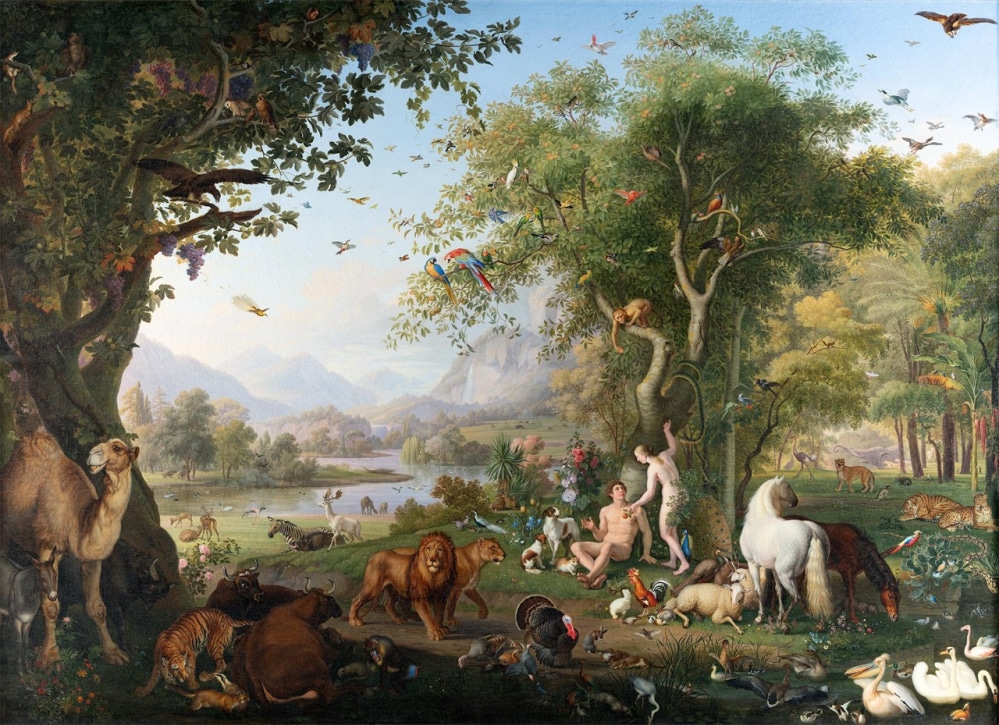

Eden.jpeg

The Back to Eden Principle

In the beginning, God designed Eden, a paradise where humans and animals were created to be immortal (Rom 8:18–25) and eat a plants-only (vegan) diet (Gen 1:20–2:25). In this paradise, animals and humans were to live peacefully and harmoniously, and there was no harm, violence, or death for either (Rom 8:18–25). In Eden, animals were designed to be friends with humans (Gen 2:18–20)Humans were given dominion over animals (Gen 1:26–28), which was expressed by humans being servants (caretakers) to the animals (Matt 23:11–12), treating them how we want to be treated (7:12, 22:39) and living peacefully and harmoniously with our fellow creatures, who were to live the same way with each other (Gen 1:20–2:25; Rom 8:18–25)
‘The Back to Eden Principle’ involves referring to Eden (Gen 1–3) to justify Christian behavior in the present. Several biblical figures such as Jesus, Paul, Sosthenes, Timothy, and Barnabas referred to Eden (Gen 1–3) to justify Christians (and others) behaving a certain way now (Matt 19:1–9, 22:15–22; Mark 10:1–12, 12:13–17; Luke 10:17–20, 20:19–26; Acts 14:8–18, 17:16–34; Rom 1:18–32; 1 Cor 6:12–20, 11:2–16; 2 Cor 4:1–15; Eph 5:22–33; Col 3:10–15; 1 Tim 2:11–15, 4:1–8; Heb 4:1–11). Therefore, these biblical figures utilized ‘The Back to Eden Principle’ to instruct Christians (and others) on how to behave in the present. Similarly, our ministry invokes ‘The Back to Eden Principle’ to oppose industries/activities that exploit, harm, or kill animals for entertainment, fashion, experimentation, and food. Likewise, our ministry cites ‘The Back to Eden Principle’ to promote alternatives to the exploitation of animals in entertainment, fashion, experimentation, and food. 'The Back to Eden Principle' is about aligning our actions toward animals with how Eden was designed.